
Deep Aquarists Travel to USA in Turtle Rescue Mission
12 January 2026
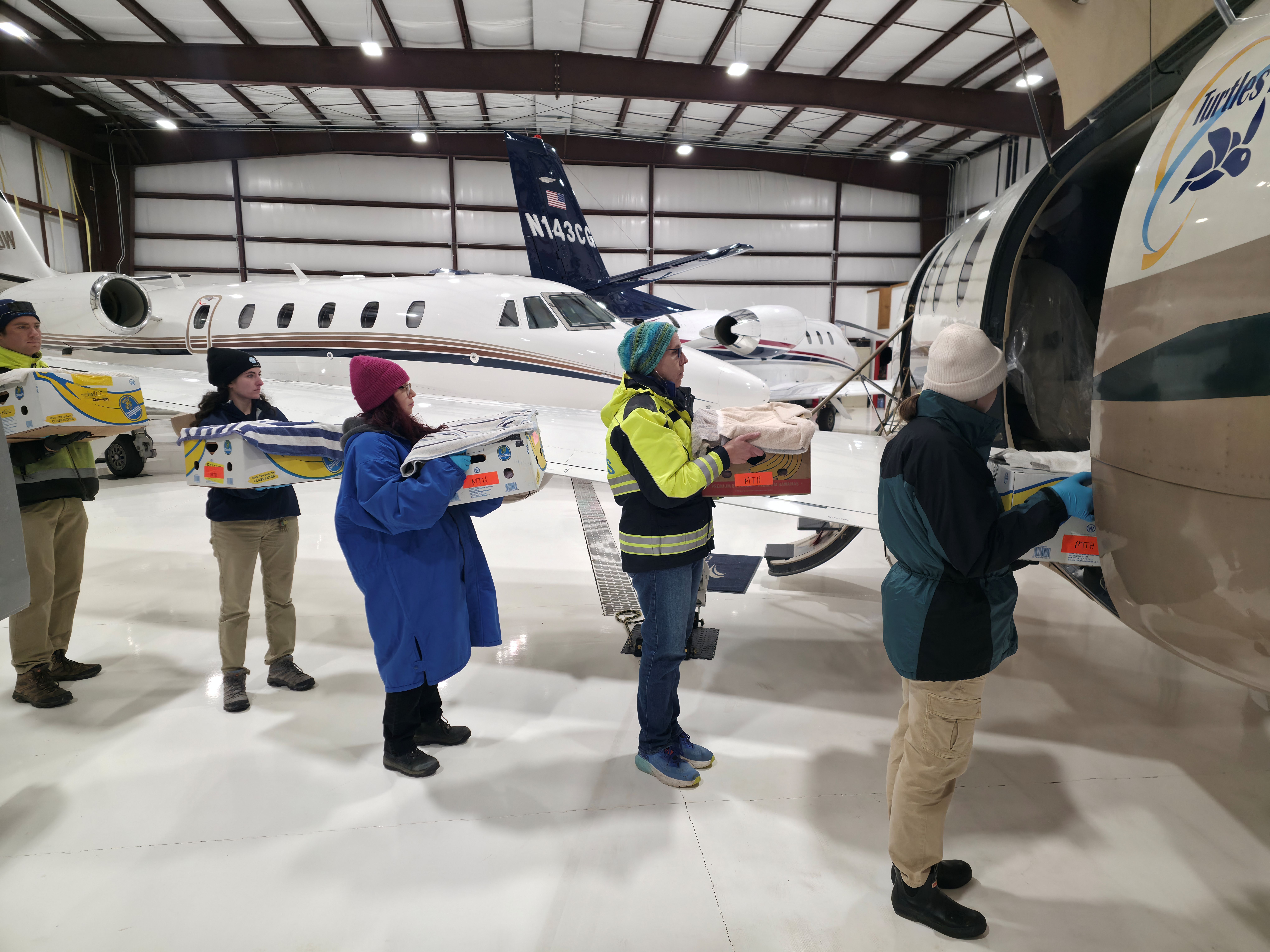
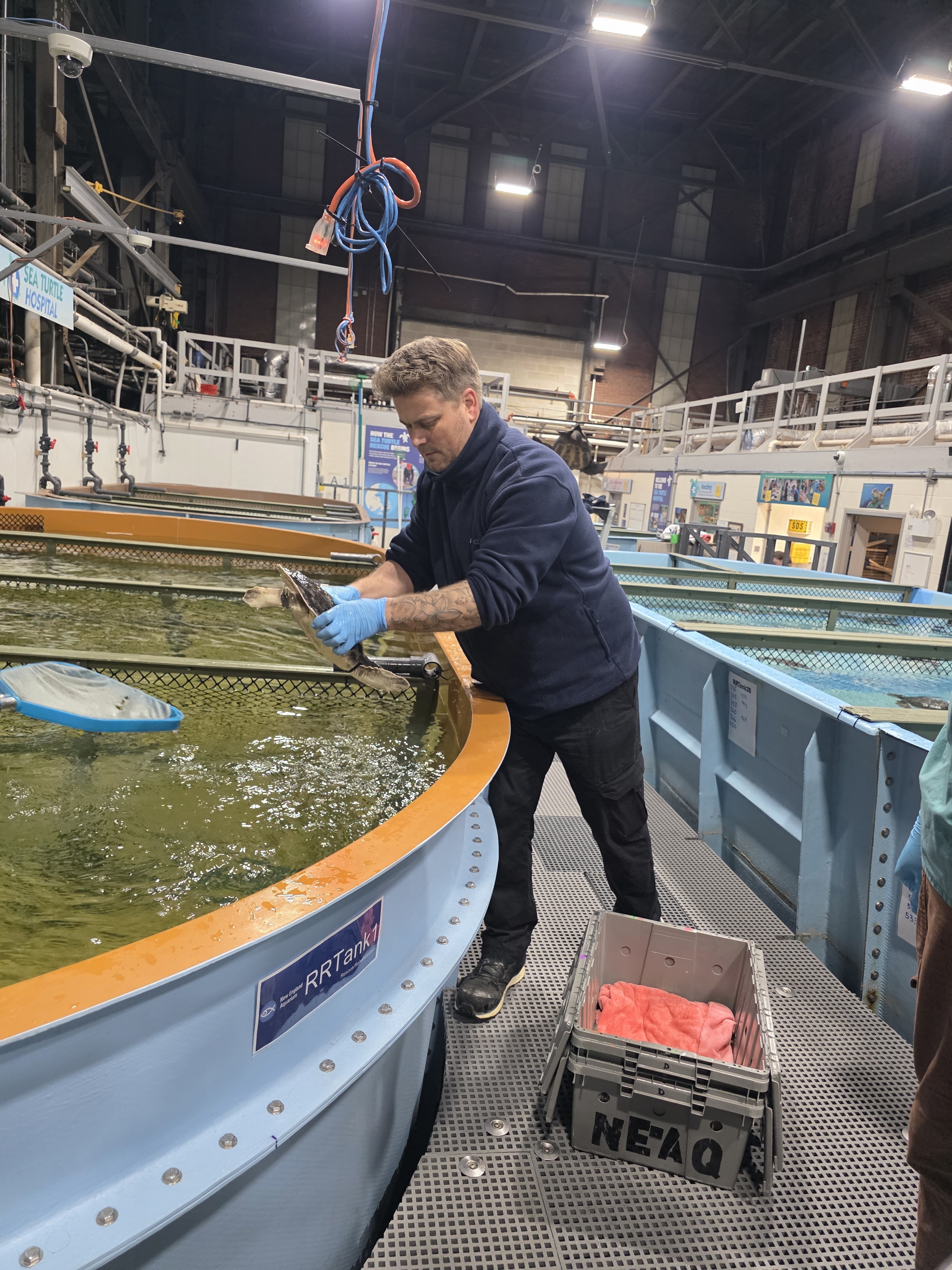

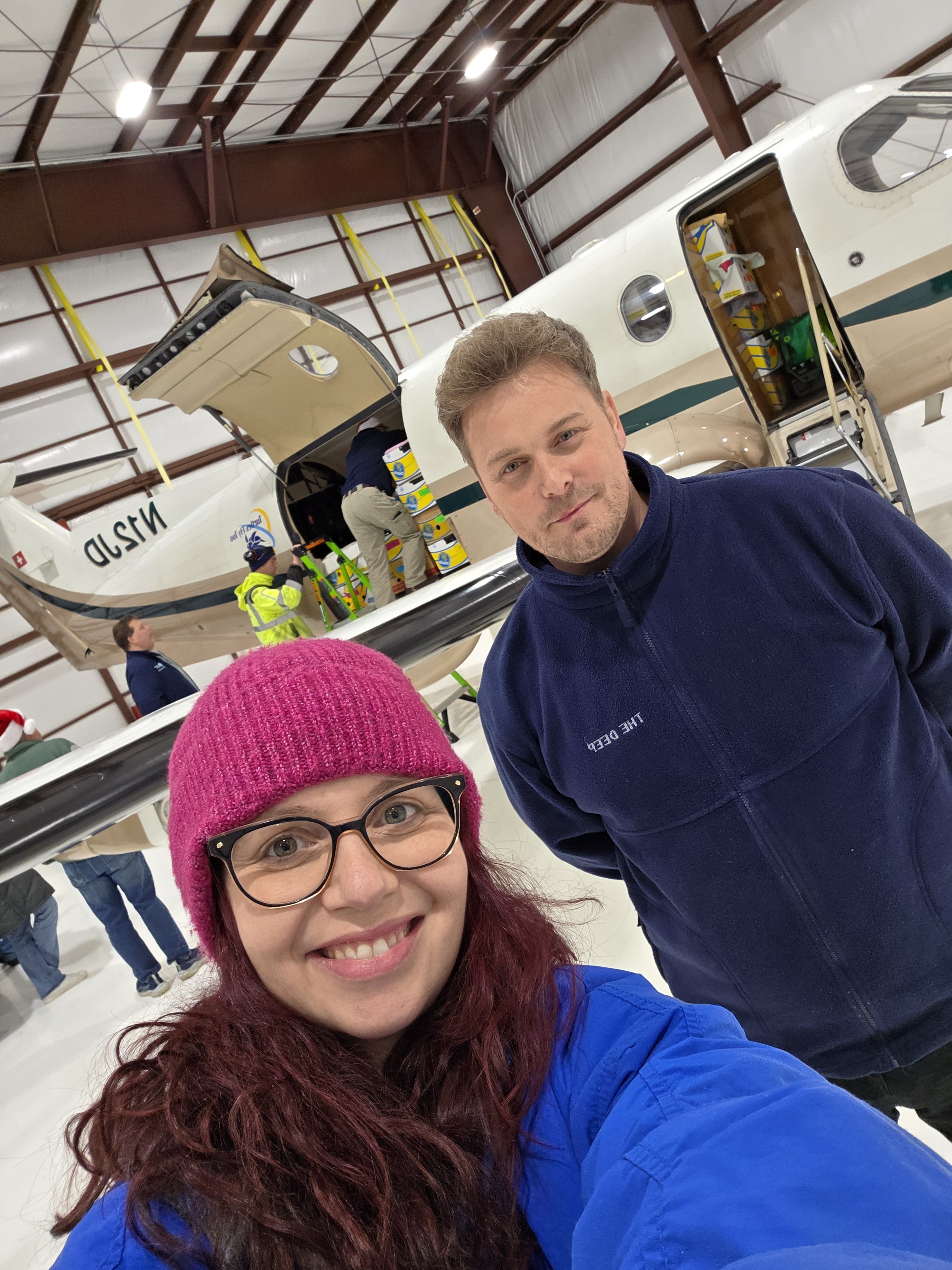
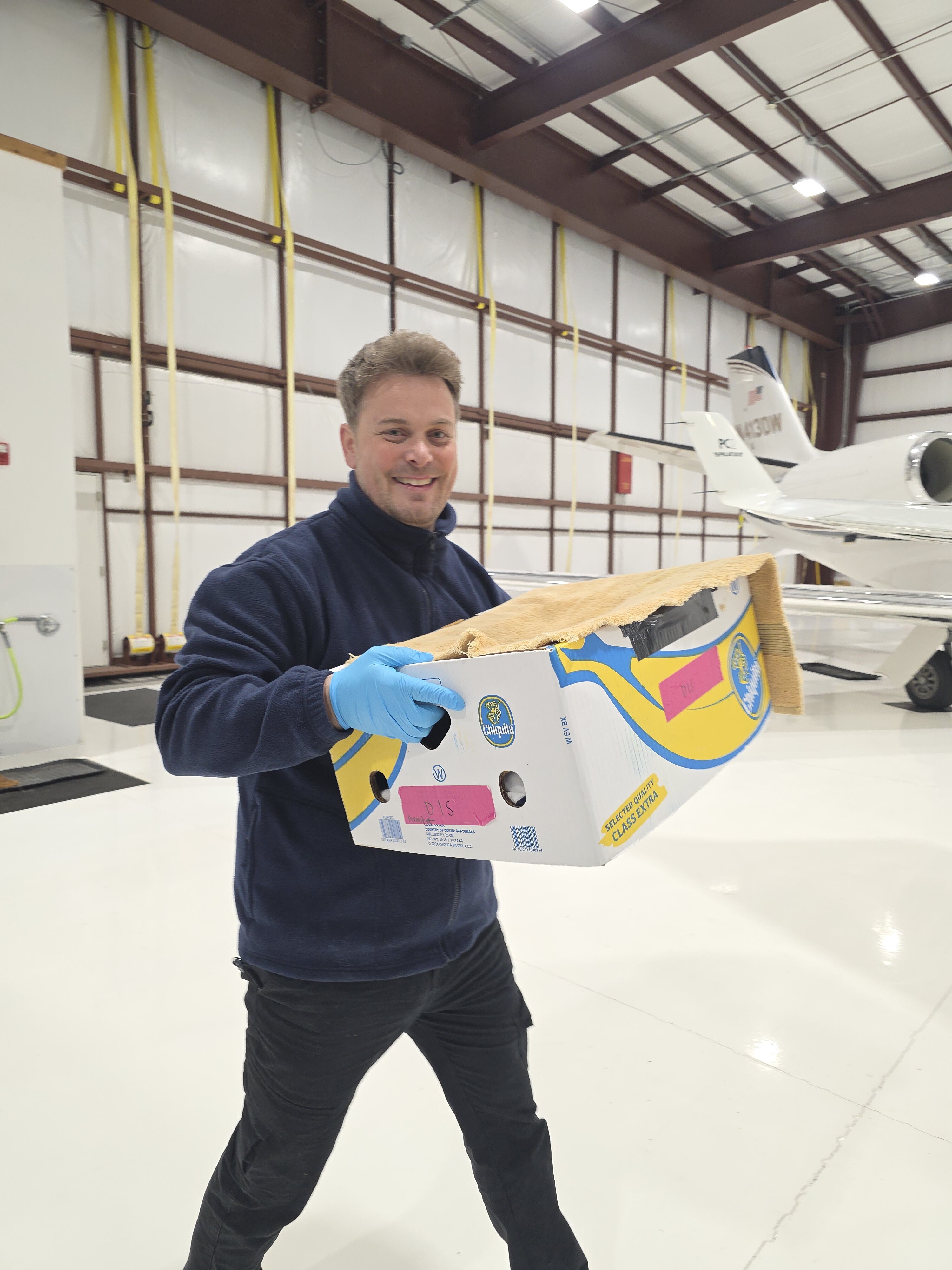
Two Aquarists from The Deep in Hull recently traded their day-to-day roles at the aquarium to volunteer at New England Aquarium in the USA on their turtle rescue mission.
2025 marks the 7th year The Deep has participated in the large-scale conservation project that sees annual involvement from hundreds of volunteers and several aquarium partners across the globe. Last month saw Deep Aquarists brace their coldest rescue trip yet, carrying out life-saving conservation work alongside other volunteers in temperatures as low as -25 degrees Celsius.
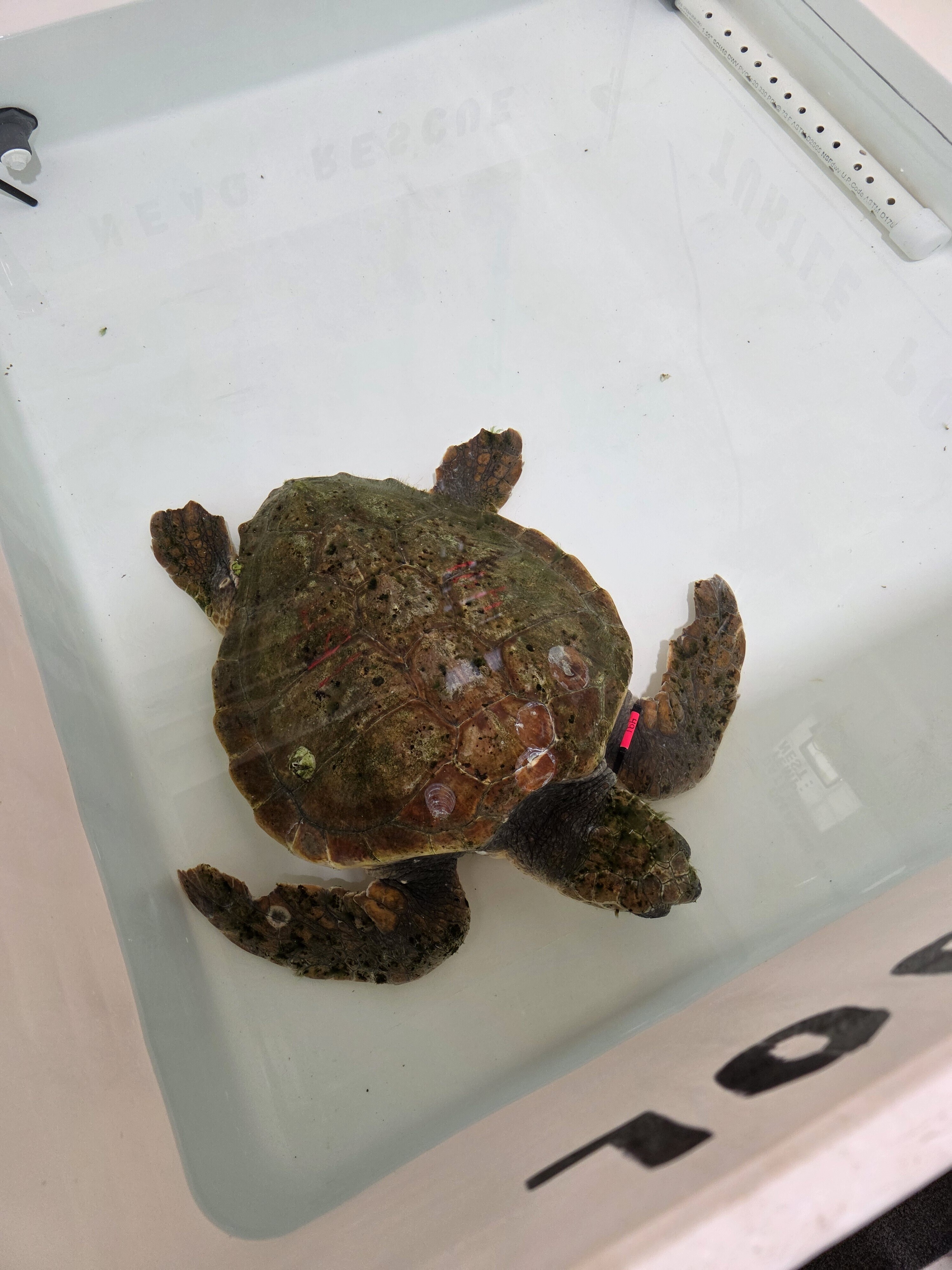
The project began in response to the annual phenomenon, around autumn time, where hundreds of cold-stunned sea turtles are found stranded along the many miles of beaches in Cape Cod, USA. In search of warmer waters, sea turtles begin migrating south as they sense the temperature begin to decline, however are often not able to complete their journey due to sudden temperature fluctuations. The geography of the region amplifies the issue; the ‘hook’ shape of Cape Cod Bay traps the cold-stunned turtles, which then are washed up onto the vast stretch of beaches.
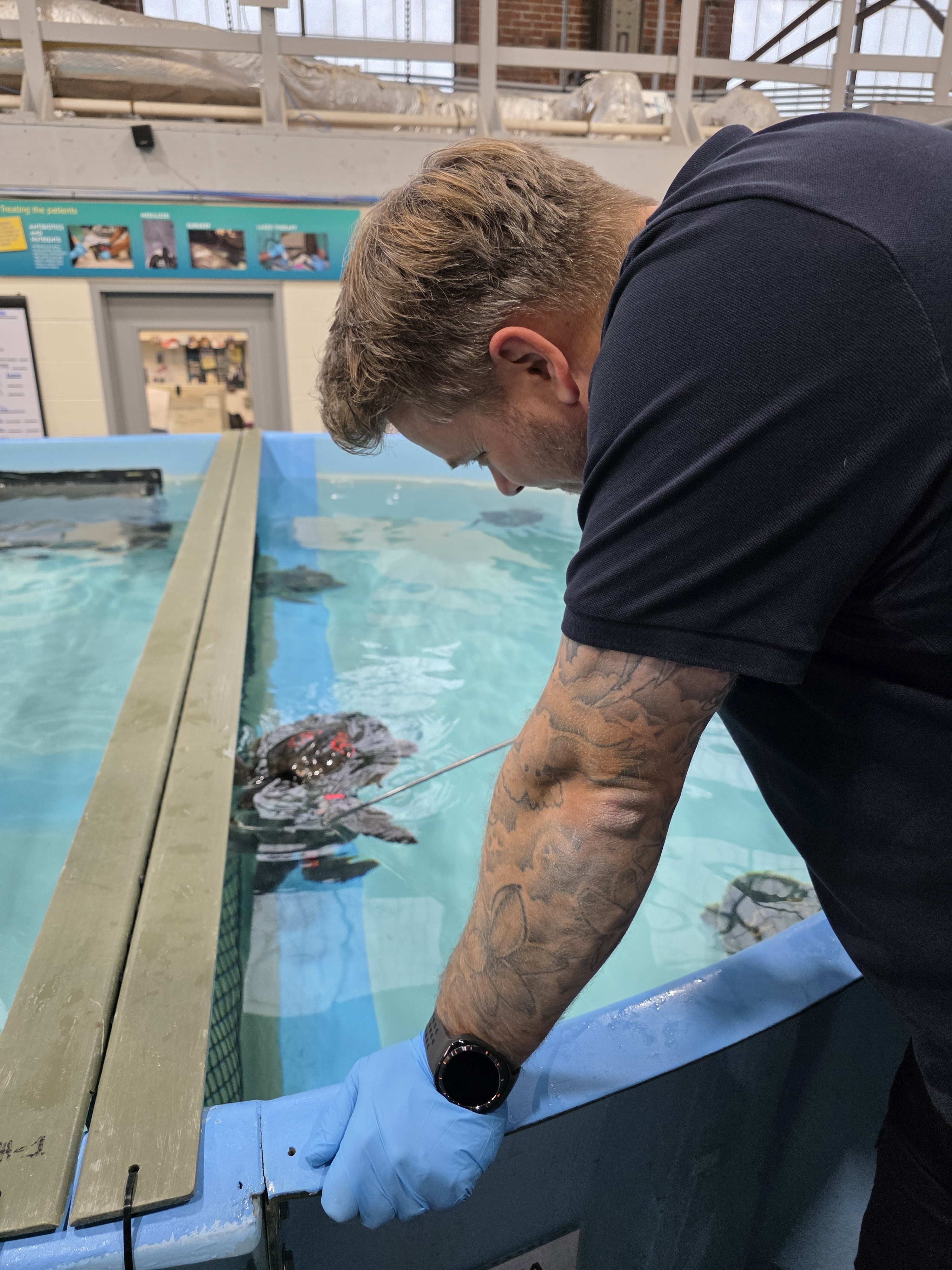
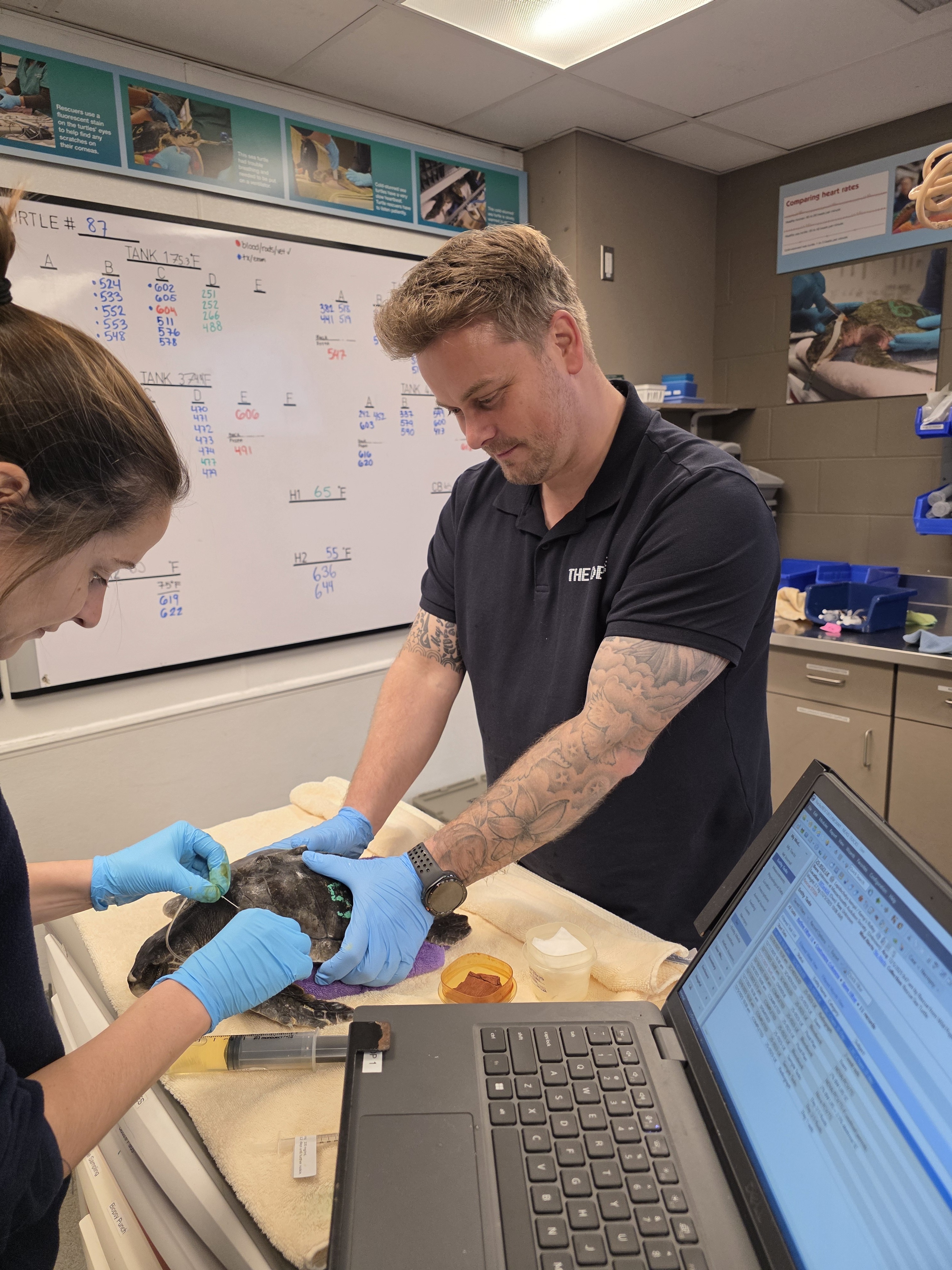
The Deep’s Aquarists volunteer alongside a dedicated team of staff, interns and other volunteers, all working diligently to bring as many turtles as possible back to full health, eventually releasing them with the hope that their populations can recover. The main species that is found stranded is the critically endangered Kemp’s ridley sea turtle, as well as Leatherback turtles, Green turtles, and Loggerhead turtles.
Without this crucial human intervention, sadly these turtles would likely not survive. However, thanks to the unified efforts of the team and volunteers, their survival rates are 80-90%. To date, over 470 sea turtles have been treated at the rescue centre.
Aquarists Shoshana Levine and Gavin Clarke discussing their recent visit, said:
“I always love working with their incredible team and helping save turtles. I’m always amazed that the turtles are able to survive, they come in as little ice cubes, sometimes without a heartbeat, and can completely recover.”
“For Gav, he specifically liked the hands-on nature of the conservation work and knowing that without our efforts the turtles would not survive. He was also impressed by their survival rates when they make it to the rescue centre and to be a part of that felt very special.
It’s great to see the collective passion and drive to succeed that extends through all the volunteers, interns, temp staff, and rescue staff. As an extension of this, it's amazing to see the network of organisations that work together and share a common goal, to get all these turtles healthy and released.”


Related News
14 April 2026
SCALING UP: PROJECT SEA SWELL The tide is turning on the Yorkshire coast.
Environment and Wildlife3 February 2026
Beyond the Blades: How Seaweed Cultivation Can Boost Biodiversity in Offshore Wind Sites
Environment and Wildlife3 February 2026